
Build a Website Without Code in 2025: Why No-Code Website Builders Win
Building a business online used to mean hiring developers, waiting weeks for launch, and paying thousands upfront. That equation has flipped. No-code platforms for websites now let anyone — marketers, designers, solo founders — build professional sites, automate workflows, and launch products without writing code.
This shift isn't subtle. It's rewriting the rules for who gets to build on the web and how fast they can move.
Here's what we'll cover:
- What visual development actually means and why it matters now;
- How AI website builder platforms like Closer are changing the game;
- Real scenarios where these tools solve actual business problems;
- How to pick solutions that fit your goals.
Jump to a Section
- What no-code really means
- Why this approach is gaining momentum
- How Closer turns ideas into live sites in 2 minutes
- What you can actually build with Closer
- How to create a website without coding: a step-by-step flow
- Comparing AI vs no-code platforms: what's the difference?
- Why now is the moment to try no-code
- Common questions about no-code website builders
What no-code really means
A no-code website builder is software that replaces traditional programming with visual interfaces. Instead of writing HTML or configuring servers, you drag elements, choose layouts, and adjust settings through intuitive controls.
The premise is simple: if you can describe what you want, the platform translates your intent into functional code. This opens web development to people who think in terms of outcomes, not syntax.
Why this approach is gaining momentum
Several forces are converging to make visual development the default choice for many projects.
Speed decides winners. Markets move fast. Testing an idea fast can mean the difference between capturing demand and missing it entirely. No-code tools for portfolios, landing pages, and storefronts let founders validate concepts before competitors catch on.
Developer time is expensive and scarce. Skilled engineers command high salaries and have plenty of options. Small businesses and early-stage startups often can't compete for that talent. Automation platforms remove the dependency.
Teams want autonomy. Marketers don't want to file tickets to update a headline. Designers want to tweak layouts without waiting for a deploy. Operations teams need dashboards built their way. Visual builders hand control back to the people closest to the problem.
Remote work accelerated adoption. Distributed teams need tools they can spin up independently. These platforms thrive in environments where coordination costs matter and self-service is valued.
How Closer turns ideas into live sites in 2 minutes
Among the solutions emerging in 2025, Closer stands out by taking AI-driven automation to a new level. Instead of choosing from a grid of pre-made designs, you just describe your business — maybe you're a travel consultant, a solo musician, or a dental clinic — and Closer's AI generates a custom site tailored to that niche.
It handles:
- Unique layouts and color schemes that fit your industry;
- Original logos and niche-specific visuals;
- Sales-focused copy, headlines, and meta descriptions;
- SEO settings that lay a strong foundation for search visibility.
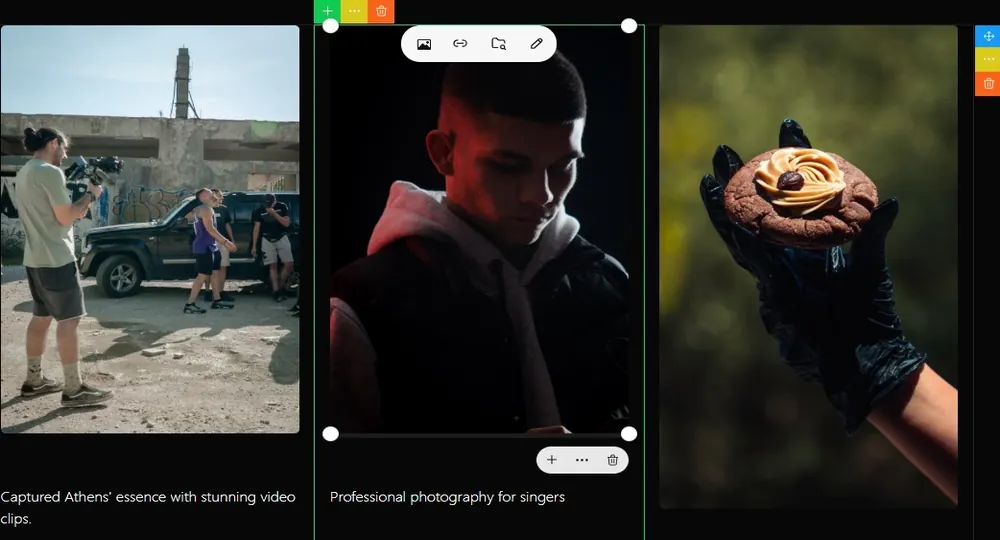
If the initial output doesn't match your vision, regenerate any element as many times as needed. Or switch to the editor and tweak everything yourself — no technical skills required. There's a massive library of design blocks, effects, and sections you can mix in. For designers who want total control, canvas mode lets you build from a blank slate.
Closer’s website editor is intuitive enough for beginners but flexible enough for professionals. Full mobile responsiveness comes standard, and you can launch a site in 2 minutes if speed is the priority.
What you can actually build with Closer
Let's ground this in specifics. Here are scenarios where Closer solves real problems:
Travel agencies that need to inspire wanderlust
A travel consultancy wants a site that sparks the urge to book. Writing compelling copy about destinations, sourcing high-quality images, and designing a layout that evokes adventure — all of that takes time and expertise most small agencies don't have in-house.
Closer's AI studies the travel niche and generates vibrant visuals: sunlit beaches, bustling markets, mountain trails. It writes inviting descriptions of packages, crafts calls-to-action that convert visitors into inquiries, and creates a cohesive brand identity with a custom logo. The result feels personal, not pulled from a generic template gallery.
Whether you're promoting eco-tourism adventures or corporate travel services, the site is ready to publish immediately. SEO-ready content helps travelers searching for "sustainable tours" or "business trip planning" find you organically.
Musicians building a digital stage
A solo guitarist wants to showcase performance schedules, share audio tracks, show merch, and collect emails from fans. Hiring a developer is out of budget. Struggling with a clunky template builder wastes creative energy.
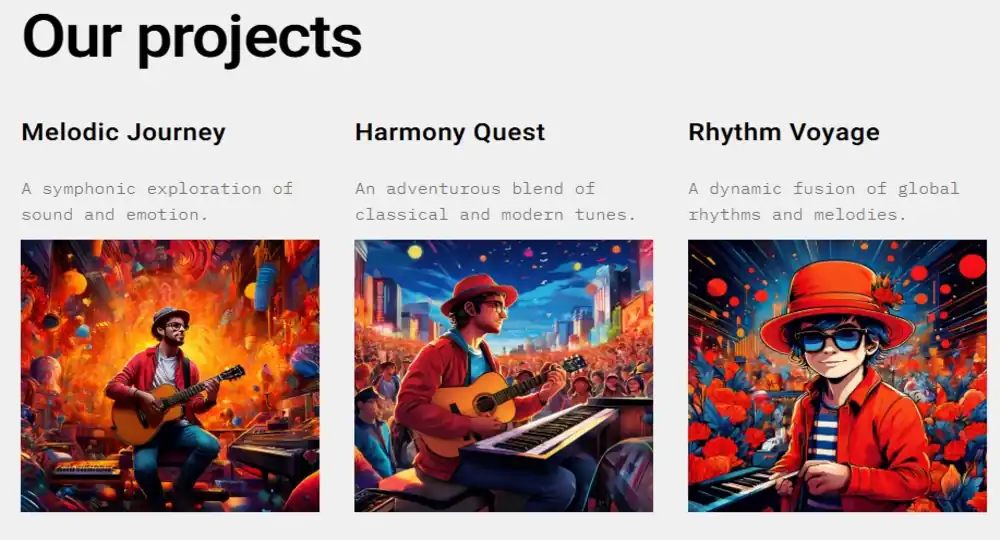
Closer analyzes the musician's genre — let's say jazz — and generates a design with bold colors and layouts that reflect that vibe. It writes SEO-friendly descriptions so fans searching for "jazz guitarist near me" land on the site.
The musician can add gig dates, upload concert photos, embed SoundCloud player, link to Spotify, integrate social media links, and set up a contact form — all through the editor. No wrestling with code. The site becomes a dynamic platform that grows with the artist's career.
Medical practices that need to build trust fast
A dental clinic wants to attract local patients. The site needs to convey professionalism, highlight services like orthodontics and teeth whitening, and make booking easy.
Closer creates a polished design with warm, trustworthy visuals — think serene clinic interiors and professional headshots. It writes clear service descriptions, generates patient-focused headlines, and includes a contact form optimized for conversions.
SEO settings ensure the clinic ranks for searches like "dentist [city name]" or "teeth whitening near me." Unlike rigid templates, Closer's approach delivers a unique identity that helps the practice stand out in a crowded local market.
Portfolios for designers and freelancers
A freelance graphic designer needs a portfolio that shows range without looking generic. Closer builds a site that highlights projects with crisp galleries, includes an about section with personality, and integrates a lead capture form.
The platform handles layout, typography, and spacing so the designer's work takes center stage. Changes take seconds — swap images, adjust colors, rewrite copy — all without touching code.
How to create a website without coding: a step-by-step flow
Here's how Closer works in practice:
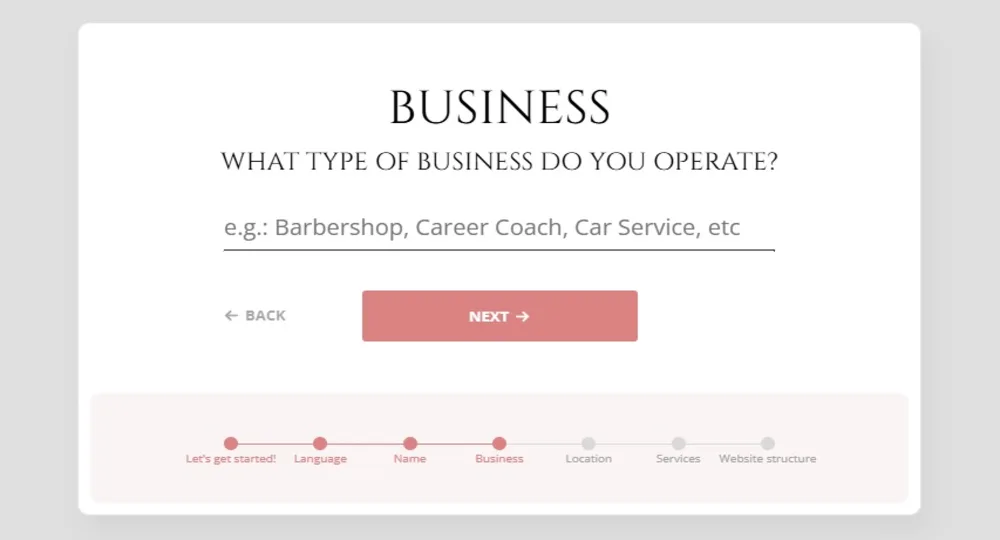
- Describe your business. Tell the AI what you do — maybe you run a music school or sell eco-tourism packages.
- Watch the AI build. In about two minutes, Closer generates a full site: design, logo, images, copy, structure.
- Review and refine. Don't like the color scheme? Regenerate it. Want a different headline? Edit it directly or ask the AI to rewrite.
- Customize further. Add sections from the library, tweak SEO settings, adjust mobile layout. The editor is built for non-technical users.
- Publish. Hit launch and your site goes live. Start sharing the link, running ads, or sending it to clients.
No backend setup, no hosting headaches, no "404 errors" to debug. You go from concept to live URL faster than most people spend in a planning meeting.
Comparing AI vs no-code platforms: what's the difference?
Traditional drag and drop site builders give you templates and an editor. You're in charge of design decisions, content, and structure. That flexibility is great if you know what you want and how to make it — but it also means deeper skills, more decisions, much more time, and a steeper learning curve.
Closer removes that friction. The AI makes informed design and content choices based on your niche, then hands you a nearly finished product. When you build a website for business, you still have full editing control, but you're starting from a strong foundation instead of a blank canvas.
For someone launching their first site, the AI approach cuts decision fatigue. For a busy business owner, it saves hours. For a designer, it provides a rapid prototype to refine.
Why now is the moment to try no-code
The gap between "I have an idea" and "I have a live product" has never been smaller. Best no-code tools for 2025 like Closer compress what used to take months into minutes. They hand creative control to the people with domain expertise — the marketer who knows the customer, the designer who understands the brand, the founder who sees the vision.
This isn't about replacing developers. It's about removing bottlenecks so more ideas get tested, more businesses get launched, and more people participate in building the web.
If you've been waiting for the "right time" to start a project, the tools are ready. Try Closer now. Describe your business, watch the AI build your site, and see what two minutes of focused effort can produce. You might be surprised how close you are to having something live.
Common questions about no-code website builders
Can I really build a professional site without any technical background?
Yes. Closer is designed for exactly that scenario. The AI handles design, content, and structure. The editor is visual and intuitive. If you can navigate email or social media, you can build a site.
What if I need something custom later?
Closer offers customization options that scale with your needs. Start simple, then add complexity as your business grows. Canvas Mode in Closer lets designers create fully custom layouts.
Are these sites actually professional enough?
Closer's AI generates designs and copy at a level comparable to hiring a professional designer. The difference is speed and cost — you get professional results in minutes, not weeks.
How does SEO work on these sites?
Closer includes built-in SEO tools: meta tags, keyword optimization, mobile responsiveness, fast load times. You can adjust settings without touching code. The AI writes optimized content and meta tags from the start, giving you a strong foundation for further promotion. Keep in mind that long-term search rankings also depend on external factors like backlinks and domain authority, which you'll develop over time.


